Tokyo Tech Talks #1: Less Noise, More Signal
A look back at the inaugural Tokyo Tech Talks event at UTokyo Kashiwa — talks on AI-assisted coding and underserved communities, a camera-based hackathon, and the start of something new.
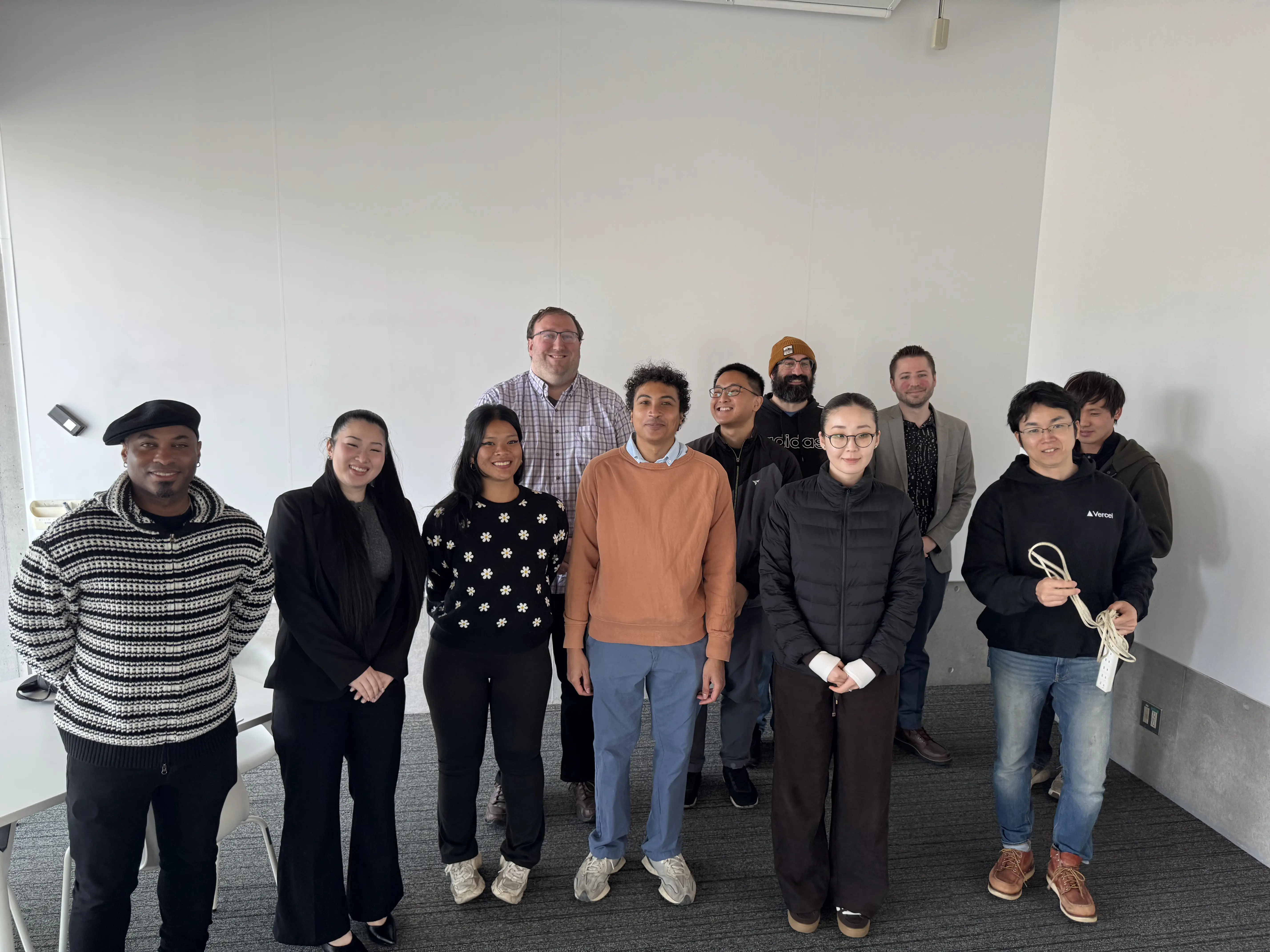
On February 22, we held the first Tokyo Tech Talks at the Environmental Studies Gallery on the University of Tokyo’s Kashiwa Campus. The idea was simple: get builders in a room, skip the hype, and talk about what actually works.
About a dozen people showed up — engineers, researchers, founders, and students. No massive conference energy. Just a focused afternoon with people who are genuinely building things.
The Talks
We had two speakers, each sharing something they’d learned from doing the work.
Mitchell Carroll — AI in Underserved Communities
Mitchell, a Senior Product Manager at Mercari, talked about the AI use cases and populations that big tech tends to overlook. It was a grounding reminder that the most impactful applications of AI aren’t always the flashiest ones — they’re in the spaces no one’s paying attention to.
Keenan Thompson — Boundaries for AI-Assisted Coding
Keenan, CEO of Arcnem AI, gave a talk on how a familiar tech stack helps you know when to let AI write code freely and when to pull it back. The core idea: if you don’t know what good looks like, you can’t tell when the model gets it wrong. Speed without judgment is just fast failure.
A few takeaways from the talk:
- Familiarity is your filter. When you know your tools, you spot agent drift before it ships. You review AI output faster than it was generated.
- Let the model run wild on boilerplate. CRUD endpoints, React components, config files, test setup — pattern replication where the risk is low.
- Rein it in on foundations. Data models, auth middleware, architectural boundaries. These are the places where “close enough” breaks everything downstream.
- Seed your local environment. Realistic data in development makes visual bugs and broken flows obvious immediately. It also helps you catch AI mistakes faster.
The Hackathon
After the talks, we ran a mini hackathon: build the most interesting AI application using camera data. Participants had an hour to put something together. The winner took home a month of Claude Max.
It was the right kind of constraint — specific enough to focus the work, open enough to get creative.
What’s Next
Tokyo Tech Talks is just getting started. We want to keep events small, practitioner-focused, and free of noise. If you’re building something and want to share what you’ve learned — or just want to be in the room — keep an eye on upcoming events.
We’re also looking for speakers, partners, and sponsors who want to help grow this community. Get in touch if that’s you.